
Bringing visitors into the system
Visitor management remains one of the biggest blind spots on construction sites. While workforce management has evolved with digital tools and real-time visibility, visitors are still often managed through manual, disconnected processes. This blog explores why that gap matters - and how bringing visitors into the same system is essential for improving safety, strengthening compliance and maintaining full site control.
The overlooked gap in construction site management
Construction sites are complex, high-risk environments where knowing exactly who is on site at any given moment is not optional — it is a fundamental safety and compliance requirement. Yet while workforce management has steadily digitised over recent years, with biometric access control, competency verification and real-time dashboards becoming standard on major projects, visitor management has largely been left behind.
On many sites today, visitors are still managed through paper sign-in books, spreadsheets or informal host-led processes that sit entirely outside the digital systems used for operatives. This creates a disconnect that undermines the very safety, security and compliance goals those digital systems were designed to achieve.
It is time to close the gap.
)
The problem with treating visitors differently
When a site operative arrives at a construction project, they typically pass through a structured digital journey: biometric identification, competency and qualification checks, induction verification, and real-time logging of their presence. Their entry, movement and exit are tracked, and they are accounted for in emergency procedures such as fire roll call.
When a visitor arrives at the same site, the experience is often entirely different. A paper sign-in book. A quick signature. Perhaps a verbal safety briefing. No structured induction. No digital record of when they left. And critically, no integration with the systems that track everyone else on site.
This creates several tangible risks:
- Inaccurate headcounts during emergencies. Without a structured visitor workflow, headcounts during emergencies are unreliable and evacuation roll calls are slower and potentially unsafe — in a fire or emergency, this is not an administrative inconvenience; it is a genuine safety risk.
- Compliance and audit gaps. Paper records and disconnected tools make it difficult to ensure GDPR-compliant data retention, control access to visitor personal data, and provide audit trails when required by regulators, clients and insurers.
- Security vulnerabilities. Without a controlled, verified entry process, there is a greater risk of individuals bypassing safety checks, entering restricted areas, or being on site without proper authorisation. Manual processes are easier to circumvent than digital ones.
- Operational inefficiency. Duplicate data entry, bottlenecks at check-in points, and the administrative burden of managing paper records all consume time and resource that site teams can ill afford on busy projects.
Why alignment matters now more than ever
Several forces are converging to make this an issue that site teams, HSE leads and project directors can no longer afford to deprioritise.
Regulatory and compliance pressure is increasing
CDM regulations, GDPR and wider data protection legislation all place obligations on duty holders to know who is on their sites, to verify that individuals have received appropriate safety information, and to maintain auditable records. These obligations do not distinguish between operatives and visitors. A paper sign-in book is unlikely to satisfy a regulator or insurer asking for evidence of a controlled, compliant process.
Clients and insurers are raising the bar
Tier 1 contractors and developers are increasingly mandating digital workforce identity and accountability across their projects. Insurers scrutinise site management practices after incidents. If visitor management is the weak link in an otherwise robust digital chain, it represents both a liability risk and a reputational one.
The technology to solve this already exists
The barrier to digitising visitor management is no longer technological. Workforce management platforms already capture identity, manage inductions, track real-time presence and integrate with emergency procedures. The logical step is to bring visitors into the same digital ecosystem, rather than maintaining a parallel, manual process that creates blind spots.
What good visitor management looks like in construction
Effective visitor management on a construction site should mirror the principles already applied to workforce management: verified identity, structured induction, real-time visibility and integration with safety procedures.
In practice, this means:
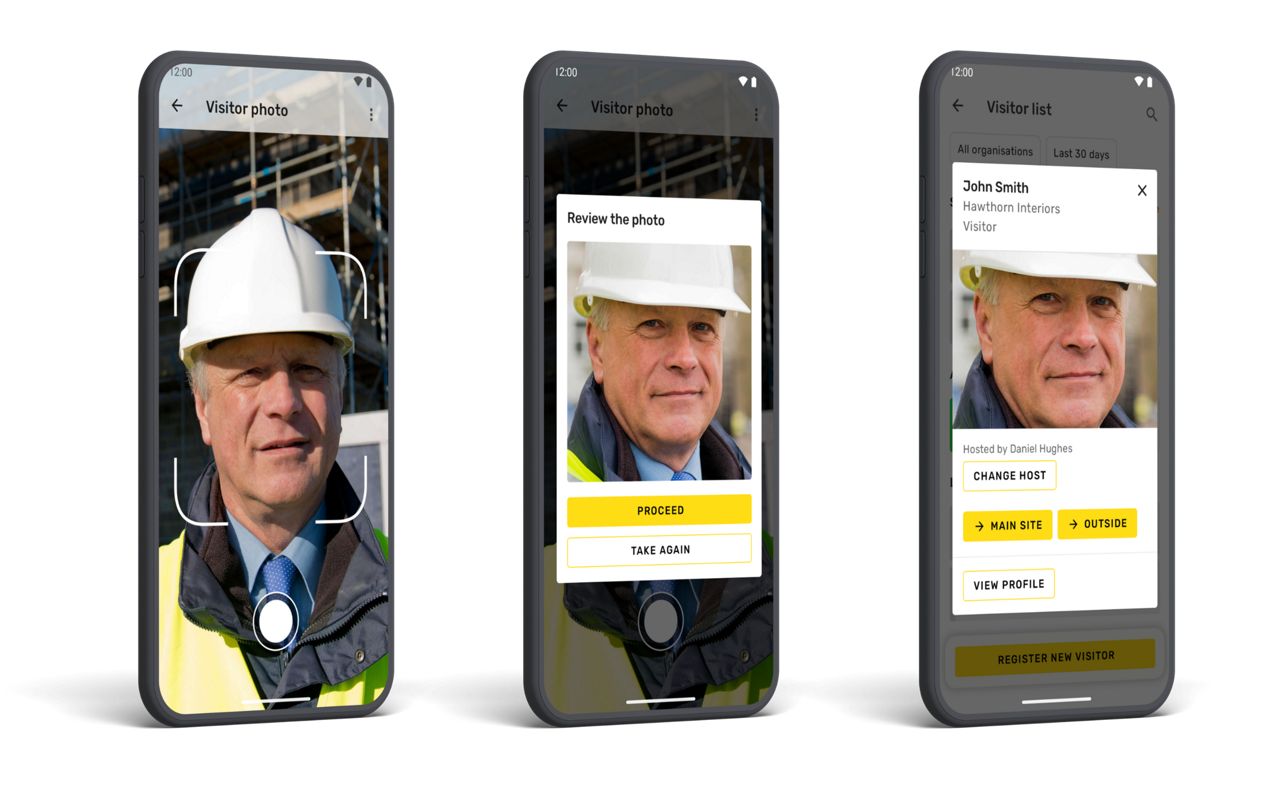
- Digital registration, not paper sign-in. Visitors can register in advance or on arrival — via a shared link, QR code or on-site device — eliminating manual sign-in and the risks that come with it.
- Induction and safety acknowledgement before entry. Every visitor should complete a digital safety briefing and acknowledge site policies before being admitted. This creates a clear, auditable record that the visitor received the information they needed.
- Real-time visibility of who is on site. Site teams should be able to see, in real time, which visitors are scheduled, which are currently on site and which have left. This is essential for day-to-day management and critical during emergencies.
- Integration with fire roll call and emergency procedures. Visitors must be accounted for alongside operatives during evacuations. Anyone currently on site is included in the fire roll call within the app, so visitors are accounted for alongside operatives during emergencies — if your visitor records are on paper, you have a gap that could cost lives.
- GDPR-compliant data capture and retention. Digital visitor management should include configurable data retention rules, ensuring that personal data is handled in line with data protection requirements — something that is extremely difficult to achieve with paper records.
- Audit trails for compliance and reporting. Every visitor interaction — registration, induction completion, entry, exit — should be logged and accessible for audit, reporting and investigation purposes.
- Managed entry and exit. Site teams control visitor admission and departure through a structured process, with the option to assign visitors to a host and an organisation for accountability.
The case for a unified approach
The strongest argument for aligning visitor management with workforce management is simple: everyone on site should be subject to the same standard of safety, security and accountability.
When visitors exist in a separate, manual process, they become invisible to the systems that keep sites safe. They are not in the digital headcount. They may not have completed a proper induction. Their presence may not be recorded accurately or retained compliantly. And when something goes wrong — an evacuation, an incident, an audit — the consequences of that invisibility become very real.
A unified approach does not mean treating visitors identically to operatives. Visitors do not need biometric enrolment or competency gating at the turnstile. But they do need to be part of the same digital ecosystem — registered, inducted, visible in real time and accounted for in emergencies.
This is not about adding complexity. It is about removing the fragmentation that creates risk. A single platform that manages both workforce and visitor presence gives site teams one source of truth, reduces administrative burden and strengthens the compliance position of the entire project.
Practical steps to get started
For site teams and project leaders looking to close this gap, the path forward is straightforward:
- Audit your current visitor process. How are visitors currently managed on your sites? Paper sign-in? Spreadsheets? A separate system? Identify where the gaps and risks are — particularly around emergency procedures, data protection and audit readiness.
- Define what "good" looks like. Establish the minimum standard you expect for visitor management: digital registration, induction completion, real-time tracking, fire roll call integration and GDPR-compliant data handling.
- Look for integration, not another silo. The goal is to bring visitors into the same digital ecosystem as your workforce, not to introduce yet another standalone tool. Evaluate solutions that integrate visitor management with your existing workforce management platform.
- Engage your site teams in the design. The best visitor management solutions are built with input from the people who use them daily — site managers, security teams, HSE leads and gatekeepers. Prioritise simplicity and usability alongside compliance.
- Make it easy for visitors too. A good visitor experience — self-registration via QR code or link, a clear digital induction, a smooth check-in process — reflects well on your site and your organisation. It also reduces bottlenecks and friction at entry points.
The bottom line
Construction has made significant progress in digitising workforce management. Biometric access control, competency verification, real-time dashboards and digital muster are now in use across many major projects. But if visitor management remains a paper-based afterthought, it undermines the integrity of the entire system.
Every person on site — whether an operative, a client representative, an inspector or a delivery driver's escort — deserves to be known, inducted and accounted for. Aligning visitor management with workforce management is not a nice-to-have. It is a necessary step toward safer, more secure and more compliant construction sites.
The technology exists. The regulatory and commercial drivers are clear. The question is whether your sites are ready to close the gap.
Reach out and find out more about Biosite Visitors
Learn more about Biosite Visitors
Digitise your visitor process with Biosite Visitors. From registration and induction to real-time tracking and fire roll call. Giving you full visibility, control and compliance across every visit.