
Why visitor management on construction sites can no longer be treated as an afterthought

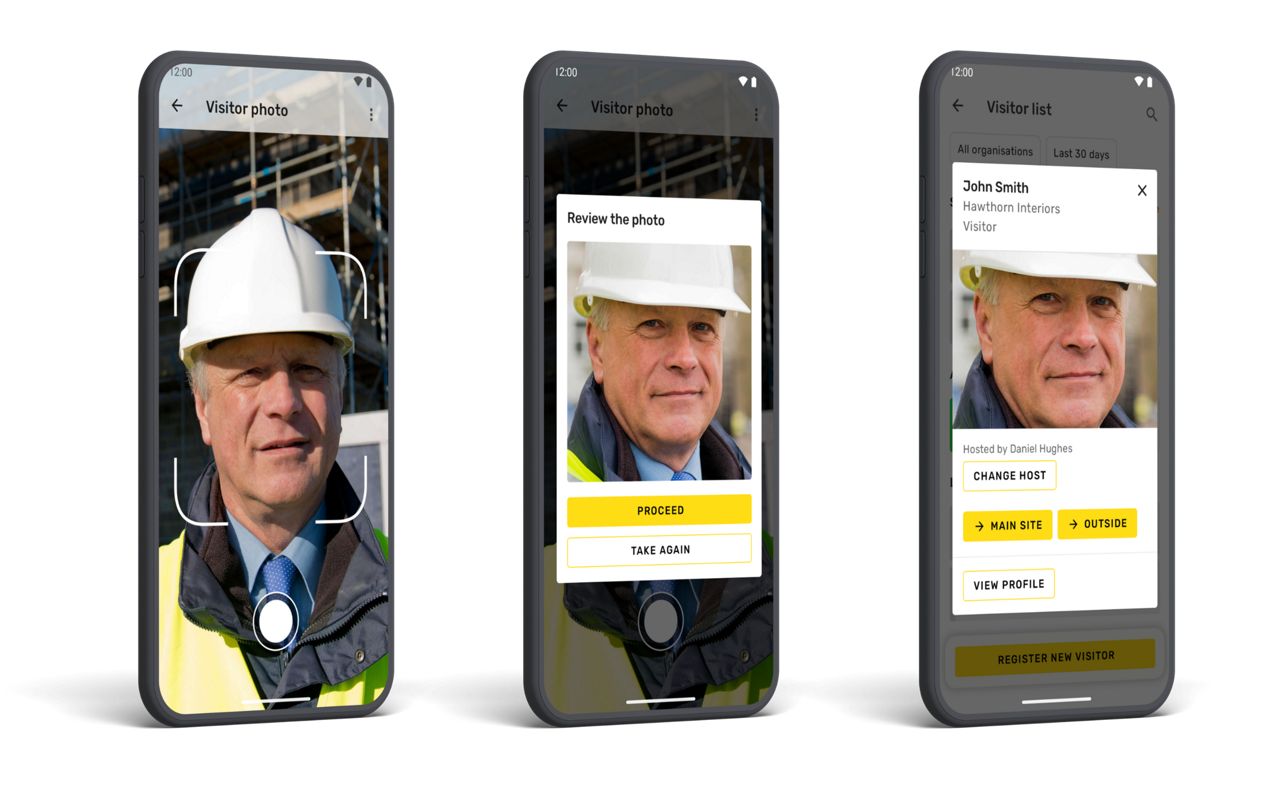
Workforce management on construction sites has gone digital—but visitor management hasn’t kept pace. Manual, disconnected processes leave visitors unaccounted for and create avoidable safety and compliance risks. This blog explores how bringing visitors into a unified digital system closes that gap.
The gap hiding in plain sight
On most construction sites, workforce management has gone digital. Operatives are biometrically verified, competency-checked at the gate, and visible on a live dashboard. If a fire alarm sounds, the muster list is generated in seconds.
Now consider what happens when a visitor arrives.
On too many projects, the answer involves a paper sign-in book, a clipboard induction, and a host who may or may not know their guest has arrived. If an evacuation is called, that visitor may not appear on any digital roll call at all.
This is not a minor administrative gap. It is a safety, compliance, and liability exposure that the industry has tolerated for too long — largely because visitor management has been treated as a separate, secondary process rather than an integral part of how sites account for every person within the hoarding.
The real-world risks of fragmented visitor processes
Construction sites are inherently high-risk environments. The people who enter them — whether they are there for a week or an hour — deserve the same duty of care. Yet the way many sites manage visitors creates blind spots that undermine the very safety systems they have invested in for their workforce.
Unreliable emergency roll calls
When visitors are recorded on paper or in a standalone spreadsheet, they sit outside the digital ecosystem used for operatives. In an emergency, site teams are left cross-referencing physical sign-in sheets against digital muster lists — a process that is slow, error-prone, and potentially dangerous. If a visitor has not been signed out, teams cannot confirm whether that person is still on site or left hours ago.
Compliance and data handling exposure
Paper-based visitor records create tangible GDPR and data protection risks. A sign-in book sitting open on a reception desk exposes personal data to anyone who glances at it — or photographs it. Visitor details captured on loose sheets are difficult to retain, audit, or delete in line with data protection obligations. As regulatory scrutiny around data handling on construction sites increases, these informal processes become harder to defend.
No structured safety induction
Operatives typically complete formal site inductions before they are permitted to enter. Visitors, by contrast, are often given a verbal briefing — or nothing at all. Without a structured, recorded induction and safety acknowledgement, the site has no evidence that a visitor was made aware of hazards, emergency procedures, or site rules. This creates a clear liability gap.
Limited visibility for site teams
Without a centralised, real-time view of visitor activity, site managers and security teams are working with incomplete information. They cannot see at a glance how many visitors are on site, where they are, or who is hosting them. This lack of visibility makes it harder to manage congestion at entry points, respond to incidents, and maintain an accurate picture of site occupancy.
Why the workforce management model is the right benchmark
The construction industry has made significant progress in digitising workforce management. Biometric access control, competency verification, automated time and attendance, and integrated fire roll call are now common on many Tier 1 and Tier 2 projects. These systems exist because the industry recognises that knowing exactly who is on site — and that they are qualified to be there — is fundamental to safety and operational control.
The logic that drives workforce management applies equally to visitors. Every person on a construction site, regardless of whether they are there for six months or sixty minutes, needs to be:
- Known — positively identified and registered
- Inducted — made aware of site-specific hazards and emergency procedures
- Visible — trackable in real time so site teams have an accurate headcount
- Accountable — included in emergency roll calls and audit trails
When visitor management is handled through a separate, manual process, it breaks this chain. The site has a digital system that accounts for the majority of the people within the hoarding, and a paper system — or no system — for the rest. That remaining gap is where risk lives.
)
What unified visitor and workforce management looks like
Bringing visitors into the same digital ecosystem as the workforce does not mean treating them identically to operatives. It means applying the same principles — identity, induction, visibility, and accountability — through a process designed for the visitor journey.
Registration and induction before entry
Visitors should be able to self-register digitally, either in advance via a shared link or on arrival at site. As part of that registration, they complete a structured site induction and acknowledge safety policies — creating a recorded, auditable trail that the site was never able to produce with a paper book.
Real-time visibility alongside the workforce
Once registered and clocked in, visitors appear on the same live view as operatives. Site managers can see at a glance who is on site, which organisation they represent, and who their host is. This is not a separate dashboard or a different system — it is a single, unified picture of site occupancy.
Integrated fire roll call
This is where the safety case becomes most compelling. When visitors are managed within the same platform as the workforce, they are automatically included in emergency muster processes. If an evacuation is called, the roll call reflects every person on site — not just those who passed through a turnstile with a biometric credential.
GDPR-compliant data handling
A digital visitor management process can enforce data retention policies automatically. Visitor records can be configured to expire after a defined period, removing the need for manual data cleansing and reducing the risk of holding personal data longer than necessary. Consent and privacy acknowledgements are captured as part of the registration flow, not as an afterthought.
Audit-ready records
Every visitor interaction — registration, induction completion, clock-in, clock-out — is logged and reportable. For health and safety leads who need to demonstrate compliance during audits or investigations, this is a significant step forward from trying to decipher handwritten entries in a sign-in book.
The operational case: simplicity and efficiency
Beyond safety and compliance, there is a straightforward operational argument for digitising visitor management and aligning it with workforce systems.
Reduced bottlenecks at entry points. Digital self-registration — whether on a visitor's own device or a site tablet — is faster than manual sign-in. Visitors who have pre-registered can be verified and approved quickly, keeping gates and reception areas moving.
Less admin burden on site teams. Site managers and gatekeepers should not be spending time managing paper records, chasing hosts, or manually compiling visitor reports. A digital process automates much of this overhead, freeing site teams to focus on running the project.
Accurate reporting without extra effort. Time and attendance data for visitors is captured automatically, enabling site teams to generate attendance summaries, occupancy reports, and audit logs without manual data entry.
Host accountability. Assigning a host to each visitor — and making that assignment visible in the system — creates clear lines of responsibility. The host knows their visitor has arrived; the site knows who is responsible for that person while they are on site.
What to look for in a construction-specific solution
Not all visitor management tools are built for construction. Generic sign-in apps designed for corporate offices lack the site-specific workflows, safety integrations, and rugged deployment models that construction demands. When evaluating options, site teams and project leaders should consider:
- Integration with workforce management: The visitor system should sit within or connect directly to the platform used for operative access control, time and attendance, and muster. A standalone tool that creates another data silo defeats the purpose.
- Construction-specific induction capability: The system should support structured, configurable inductions with safety acknowledgements — not just a name-and-signature capture.
- Fire roll call inclusion: Visitors must be part of the emergency muster process, visible to the same teams using the same tools.
- Mobile-first design: Site teams operate on the move. The solution needs to work effectively on mobile devices, enabling gatekeepers and hosts to manage visitors from wherever they are on site.
- GDPR-compliant data retention: Configurable retention settings that automatically manage visitor data lifecycle are essential, particularly on sites with high visitor volumes.
- Ease of use for visitors and site teams alike: If the process is cumbersome, people will bypass it. The visitor experience needs to be quick and intuitive; the admin experience needs to be minimal.
The industry is moving — the question is whether your sites are keeping pace
The push toward digitisation in construction is accelerating, driven by tightening regulations, insurer expectations, and client mandates around accountability and compliance. The UK Building Safety Act, CDM regulations, and broader client and insurer requirements are all increasing the expectation that sites can produce verifiable, auditable records of everyone who has been on site. Workforce management has already made this transition on many projects. Visitor management is the next logical step — and arguably an overdue one.
The sites that continue to rely on paper sign-in books and informal processes are not just accepting inefficiency. They are accepting a gap in their safety model, a weakness in their compliance posture, and a risk that is entirely avoidable.
Bringing visitors into the same digital framework as the workforce is not about adding complexity. It is about closing the last significant blind spot in site accountability — so that every person on site is known, inducted, and accounted for.